

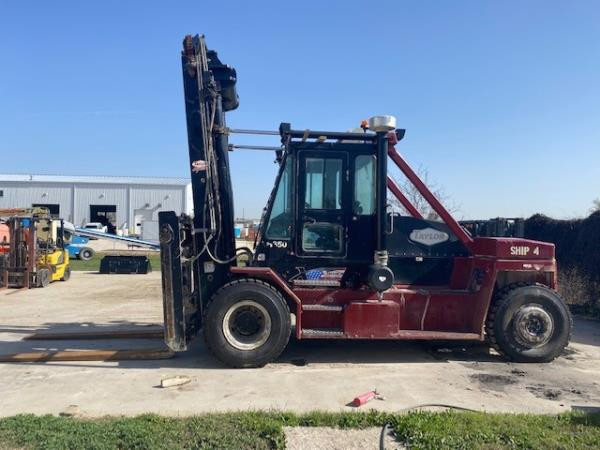
Make: TAYLOR
Model: TXH350L
Year: 2016

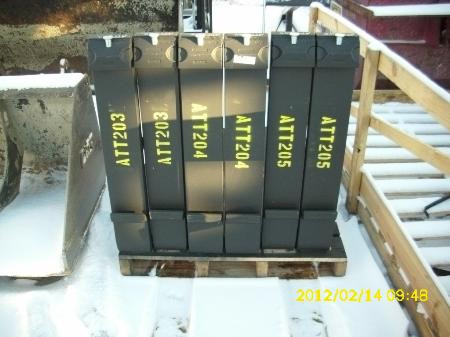
Make: Manitou
Model: 48" Forks
Year: 2012
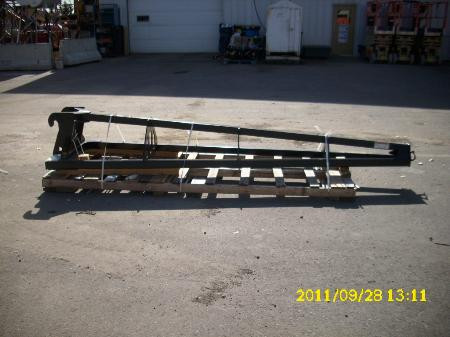
Make: JLG
Model: Truss Jib 12'
Year: 2011
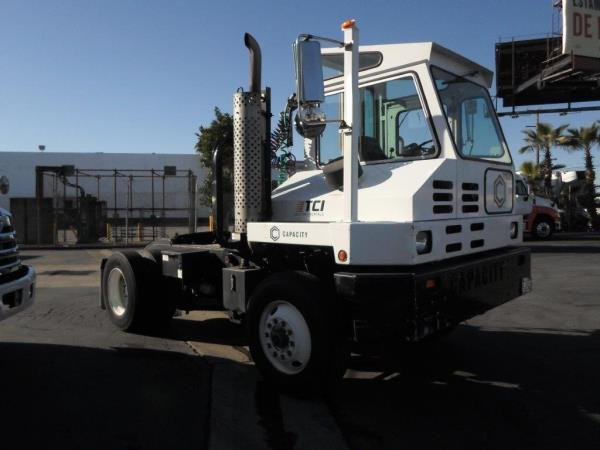
Make: Capacity
Model: TJ5000 DOT
Year: 2010
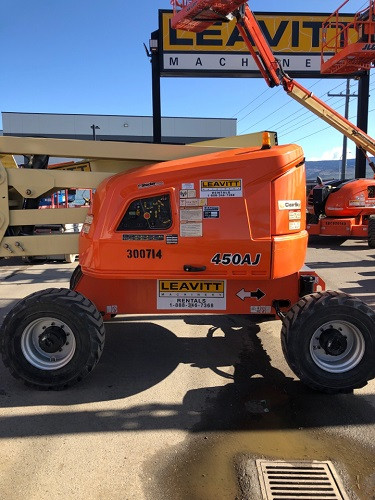
Make: JLG
Model: 450AJ
Year: 2016

Make: FrostFighter
Model: IDF350
Year: 2015
Daewoo Counterbalance Forklifts West Valley City
Using a Standard Counterbalance forklift
1 Carry out a pre-shift inspection before utilizing the equipment. or OSHA guidelines state that a pre-shift checklist must be done at the start of every work shift. Each and every different machinery as well as its attachments has its own checklist listing steering, brakes, emergency brakes, lights, horn, controls and safety features.
2 Start up the equipment and check controls. First make sure that your seatbelt is fastened and the seat is securely in place and adjusted for your comfort. Look underneath the machinery after you move it for any indications of leaks. The operation of each type of forklift is different.
3 Don't forget differences in the basics of lift truck operation as opposed to a regular vehicle. The forklift's rear end swing happens due to the fact that the truck steers with its rear wheels. Disregarding this detail is a main cause of injuries and accidents to employees. The almost 90-degree turn from the front wheels must be performed with great caution. These top-heavy machinery have a high center of gravity even without a load. When transporting or lifting a load this top-heaviness is exacerbated.
4 Keep forks close to the ground when traveling. Utilize caution when approaching loads. Be sure the forks line up properly with the pallet. Lift the load just as high as is needed, tilting it back to help stabilize the machinery. Only drive backwards if the load is very bulky that it obstructs the vision of the operator.
5 Check the wheels on trucks/trailers prior to loading and unloading. Do not travel on slopes, specially when lifting a load. The machine could tip over on a slope. When driving on a slope is necessary, always drive up the slope and back down. The load should be kept on the uphill side of the truck.
6 The lift truck operator must always be in firm control all the time. Tipping over is the main cause of operator injuries. The driver must never try to jump out of the truck in case of a tip-over. The safest approach is to lean away from the direction of fall while holding the steering wheel and bracing your feet.
- Yale Narrow Reach Forklifts West Valley City
Yale provides a range of very narrow aisle forklifts that are specifically made for maximum storage density. These very narrow aisle forklift are ideally suited for case picking and pallet handling in applicants varying from... More - Komatsu Outdoor Forklift West Valley City
Forklifts are used in many types of businesses. They are common features in mining operations, on construction sites and in numerous warehousing facilities, ports, rail yards and receiving and shipping operations. Basically, a forklift is... More - Nissan Reach Forklift West Valley City
During the development of the RG Series, a lot of interviews were done by logistic managers and many truck operators. The corporation has also carried out lots of studies on ergonomics and repetitive strain injuries.... More - Manitou Outdoor Forklift West Valley City
Most businesses that are in the warehousing or shipping and receiving industries use lift trucks on a daily basis. This handy piece of industrial machine is capable of performing numerous tasks. Maintain and take care... More - Doosan IC Forklifts West Valley City
How to Utilize a Forklift Lift trucks are material handling equipment which could move loads. Most commonly, these equipment are used in certain industries to move heavy materials in a wide variety of settings such... More